
A joint venture built for growth, compliance, and agility in a highly regulated market.
As a co-owner of Travel Retail Norway (TRN), the joint venture with Norse-Trade, Gebr. Heinemann contributes to the development of one of Europe’s most regulated travel retail markets. Thanks to its long-standing presence in the Scandinavian country and its expertise in the market, the company was well prepared for the adaptions the business required in 2025.
Norway’s legal framework allows for limited promotion of alcoholic beverages and tobacco. At the same time, strong domestic competition, particularly in beauty and confectionery, increases pricing pressure and intensifies promotional activity. Against this backdrop, TRN has continued to position itself as a reliable partner for airport operators while maintaining an appealing offer for travelers.
TRN operates at the airports in Oslo, Bergen, Stavanger, and Trondheim, with Oslo accounting for the majority of sales. Jens Wolf, Director Sales Nordics at Gebr. Heinemann, explains: “We firmly believe that the travel retail market in Norway will remain strong. Our focus is on addressing each traveler individually and continuously refining our shop floor to meet evolving consumer needs.”
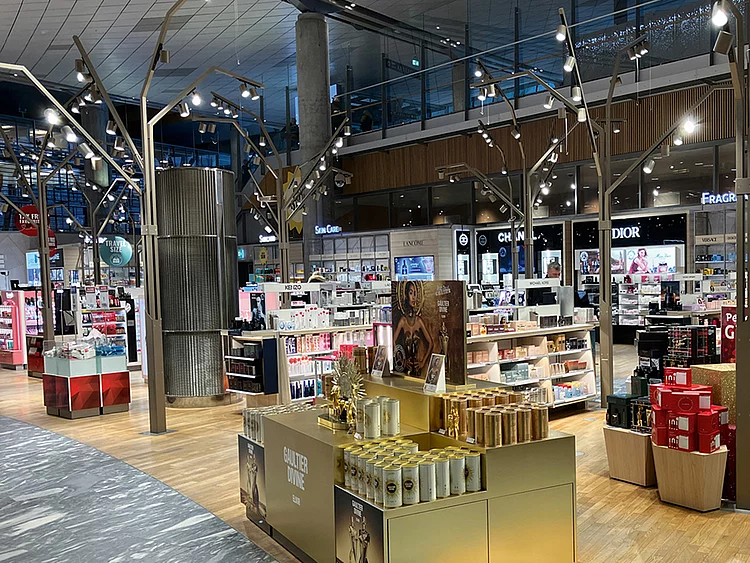
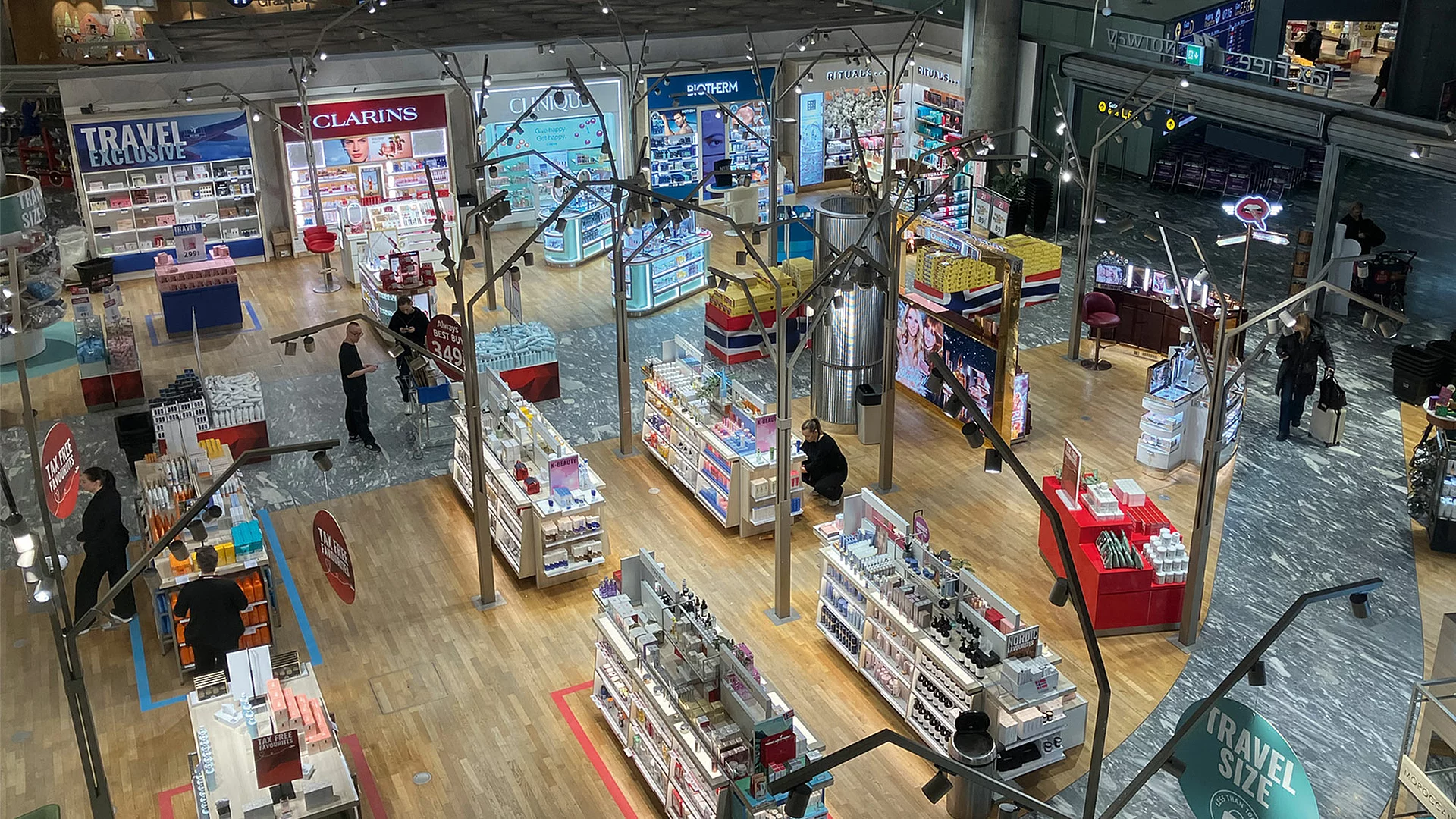
In Oslo, TRN operates six shops spanning over 9,000 square meters of retail space, including a 4,000-square-meter arrivals area. The store concepts combine a sense of local identity with exciting international hero brands. Flexible fixtures and modular layouts allow for quick adjustments to changing consumer behavior and category trends. Tore Hov, CEO of Travel Retail Norway, says: “Our stores are designed to remain adaptable. We can introduce new experiences quickly and respond dynamically to changing traveler needs.”

“Our stores are designed to remain adaptable. We can introduce new experiences quickly and respond dynamically to changing traveler needs.”
LTC and Beauty: Key Revenue Drivers
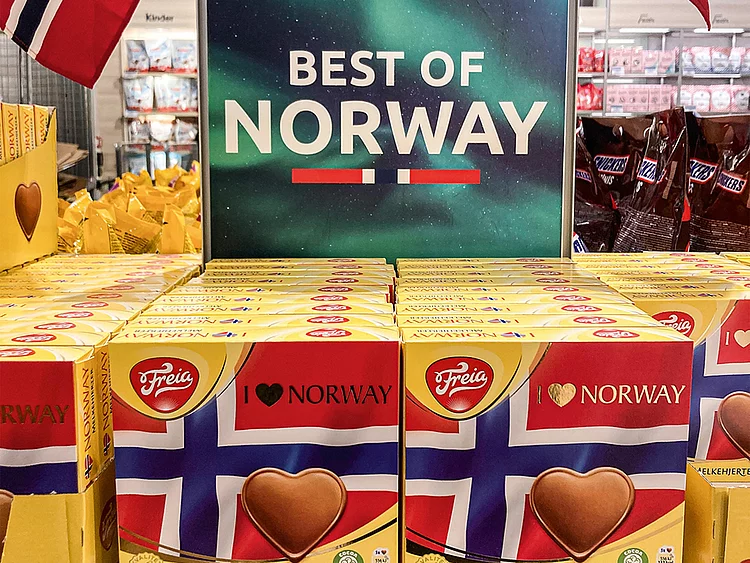
Despite regulatory constraints and changing consumer preferences, Liquor, Tobacco, and Confectionery (LTC) remains a core revenue pillar. A notable feature of the Norwegian market is the significant presence of snus, a key contributor to tobacco sales alongside cigarettes. In confectionery, multi-buy promotions continued to perform strongly. Examples include Freia chocolate bar bundles and year-round “3 for 2” offers on “I Love Norway” chocolate hearts. These promotions are designed to counter domestic price pressure and sustain conversion.
Beauty remains another strong performer. Norway generates the highest travel retail turnover in Europe for sun care products, reflecting strong consumer awareness of skin protection and the country’s comparatively high incidence of skin cancer. TRN’s annual sun care special offers run from April to August and feature 20 percent discounts across all brands. Leading brands include Biotherm, Piz Buin, and La Roche-Posay.
Tollager C: Unlocking New Categories and Growth Potential
Another factor in 2025 was the introduction of the “Tollager C” (customs warehouse) regulation in March, which expanded assortments to include categories that were previously excluded from tax-free retail. Newly added categories include drugstore products, toys from brands such as Lego and Mattel, Stanley cups, as well as nuts and dried fruits. These products are sold duty-paid in the tax-free shops.
TRN sources food and supplements in this segment locally. A top seller is Möller’s Tran Omega-3, which is available in capsule and oil form. The product is purchased in large quantities and is particularly popular among Chinese travelers. Tore Hov comments: “These products have become popular gift items for international travelers, strengthening the local identity of the assortment. By far, the best-selling new product is Norwegian fish oil, known as tran.”

“Our goal is to keep shaping travel retail with solutions that meet today’s and tomorrow’s consumer needs.”
Greener Routes Ahead
However, local identity is only one part of the equation. Gebr. Heinemann also considers the operational side behind the scenes, especially logistics, where smarter transportation choices can make a measurable difference. For quite some time, the company has been using HVO trucks to transport goods from Hamburg to its Norwegian locations in Oslo, Bergen, and Stavanger, as well as to the N-Hub. HVO (hydrotreated vegetable oil) is a biofuel derived from waste and used cooking oil. Compared to diesel, it reduces CO2 emissions by around 90 percent. Starting in spring 2026, the final third of the journey will also be electrified: The trucks are being converted to electric, enabling emission-free, quieter transportation. This shift to alternative drive systems is part of Gebr. Heinemann’s sustainability strategy, as the supply chain accounts for a significant portion of the company’s carbon footprint.
Beyond transport, circular economy activities across the Heinemann Group are embedded in the “Waste to Value 2030” strategy. This provides a common framework for reducing waste, increasing resource efficiency, and lowering emissions. The approach involves optimizing consumables and packaging, increasing the share of recycled and bio-based materials, and keeping products and materials in circulation for as long as possible. TRN is already implementing these principles. One example is a partnership for shopping baskets made from ocean plastic collected in Norwegian fjords. The baskets feature a modular design, allowing teams to replace individual components rather than discarding entire units. Damaged parts are returned to the manufacturer and recycled into new products, supporting a closed-loop approach and reducing waste.
Furthermore, DE&I plays a central role at TRN: Shop managers, category managers, and HR professionals are certified as diversity managers and must recertify regularly. Accessibility is also gaining importance in the “workspace” area of focus. TRN also conducts regular audits with the Norwegian Association of Disabled, a human rights organization, to ensure equal opportunities and fair, safe working conditions. Heinemann’s diversity strategy provides the framework here. TRN is taking things a step further by seeking an objective assessment from experts who have been affected. Saskia Möller, Director Legal, Compliance & Sustainability, comments: “Our locations in Oslo and across the Nordics are an important blueprint for Gebr. Heinemann’s global sustainability and DE&I strategy. This region shows what practical progress can look like every day, from circular solutions to low-emission logistics.”
Payment Innovation: Bitcoin Pilot Project
In 2025, TRN introduced Bitcoin as a payment method for Click & Collect orders. This pilot program targets travelers who use cryptocurrencies in their daily lives and supports the development of further digital services. TRN is the first travel retailer in Europe to offer Bitcoin as a payment method.
Jens Wolf concludes: “Norway exemplifies how we combine adaptability with ambition – whether through tailored assortments, sustainable logistics, or digital innovation. Our goal is to keep shaping travel retail with solutions that meet today’s and tomorrow’s consumer needs.”
Contact
Jens Wolf
J_Wolf@gebr-heinemann.de