
Modernization, expansion, and sustainability drive Gebr. Heinemann’s supply chain transformation.
For Gebr. Heinemann’s supply chain, 2025 was not a year of major announcements, but rather one of decisive action. The strategic direction has been set: Gebr. Heinemann’s supply chain is to become more reliable, resilient, efficient, and sustainable – and thus support growth over the next decade. The preliminary analysis was clear. The current setup is no longer capable of handling the projected volumes. “We took a close look at the volumes we can expect to handle, and it quickly became clear that we need to significantly expand our logistics and supply chain network,” says Michael Meier, Vice President Global Supply Chain.
Major Infrastructure Programs in Allermöhe and Erlensee
The two large German distribution centers, Allermöhe and Erlensee, have grown organically over the past two decades. Today, they are reaching their limits. Meanwhile, growth regions are shifting noticeably toward Turkey and the Middle East. The solution is a combination of modernization, technological progress, and geographical expansion of the network.
Therefore, the two logistics centers are about to undergo the largest modernization measures in the company’s history. In Allermöhe, a good 22 years after it went into operation, facilities are going to be renovated, material flows are being rethought, and complexities that have arisen over the years are being eliminated. The goal is to achieve a continuous flow of goods that is automated and requires fewer manual interventions.
In Erlensee, the focus is on the heart of the facility: the shuttle system for small items. It will be replaced in precisely planned stages while operations continue. Meanwhile, Heinemann is testing robotics in the picking process for the first time. The goal is to reduce ergonomic stress and relieve the strain on employees while stabilizing capacity.
A New Hub in Istanbul – Closer to Growth Markets
A key element of the new strategy is establishing a regional hub in Istanbul. The region is growing rapidly, and the shops at Istanbul and Antalya airports as well as the Jeddah location generate high volumes. Michael Meier says: “To support this growth even better, we will significantly shorten the replenishment times. The new hub will drastically reduce the distance between the warehouse and the airport, since most goods, especially fast-moving products, will no longer have to be delivered from Germany, but rather, will come directly from Turkey.” Initial filling is planned for late 2026, with the first customer deliveries scheduled for early 2027. An external service provider will operate the hub, creating flexibility, reducing investment, and making the network more agile overall.
Another advantage is the diversification of transport options. With each new tender, Gebr. Heinemann implements at least two service providers capable of serving the main routes, thereby reducing dependencies. Efficiency will also increase: Orders will be rounded to full cartons instead of single picks, which will reduce error rates, handling costs, and complexity. Optimized packing patterns, better pallet quality, and higher truck utilization are also intended to reduce costs and improve service quality.
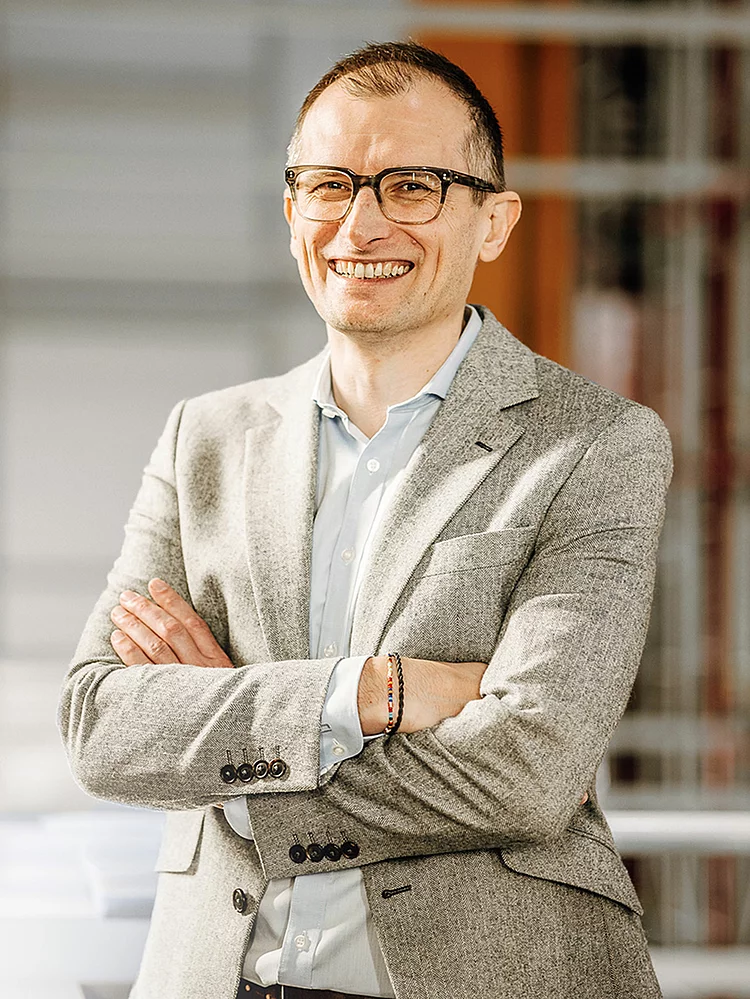
“We are creating a network that matches our growth, better supports our customers, and truly prioritizes sustainability – not just out of duty, but from genuine conviction.”
Sustainability as a Key Component
Sustainability is a key evaluation criterion for all partners. “Those who do not offer credible green solutions will have a hard time,” says Michael Meier. The hub in Istanbul will enable significantly more rail transport in the future. And in Germany, the use of e-trucks is growing. Together with partners such as Kühne+Nagel, e-trucks are already being used for container transport to the ports of Hamburg and Bremerhaven. Michael Meier emphasizes the long-term approach by stating: “As a family business, we consciously invest in the issues we believe are right. Not because we have to, but because we believe it is the better way – for the company, for our employees, and for the communities we operate in.”
Data as a Foundation
By 2026, Heinemann will also have laid the technological foundation for taking planning to a new level. All relevant data will be transferred to a scalable, high-performance cloud platform. This will enable more accurate forecasts, smarter replenishment, and clearly segmented product strategies. A targeted approach allows for a different treatment of fast-rotating items in comparison to luxury items – something that has often been treated the same historically. This will make the supply chain more predictable, faster, and more flexible.
Michael Meier explains the transformation as follows: “We are creating a network that matches our growth, better supports our customers, and truly prioritizes sustainability – not just out of duty, but from genuine conviction.”
Sustainable Impact of the Modernization
Modernizing the logistics infrastructure at Allermöhe and Erlensee is a key lever in achieving Gebr. Heinemann’s Sustainability Strategy 2030 targets.

Contact
Michael Meier
M_Meier@gebr-heinemann.de