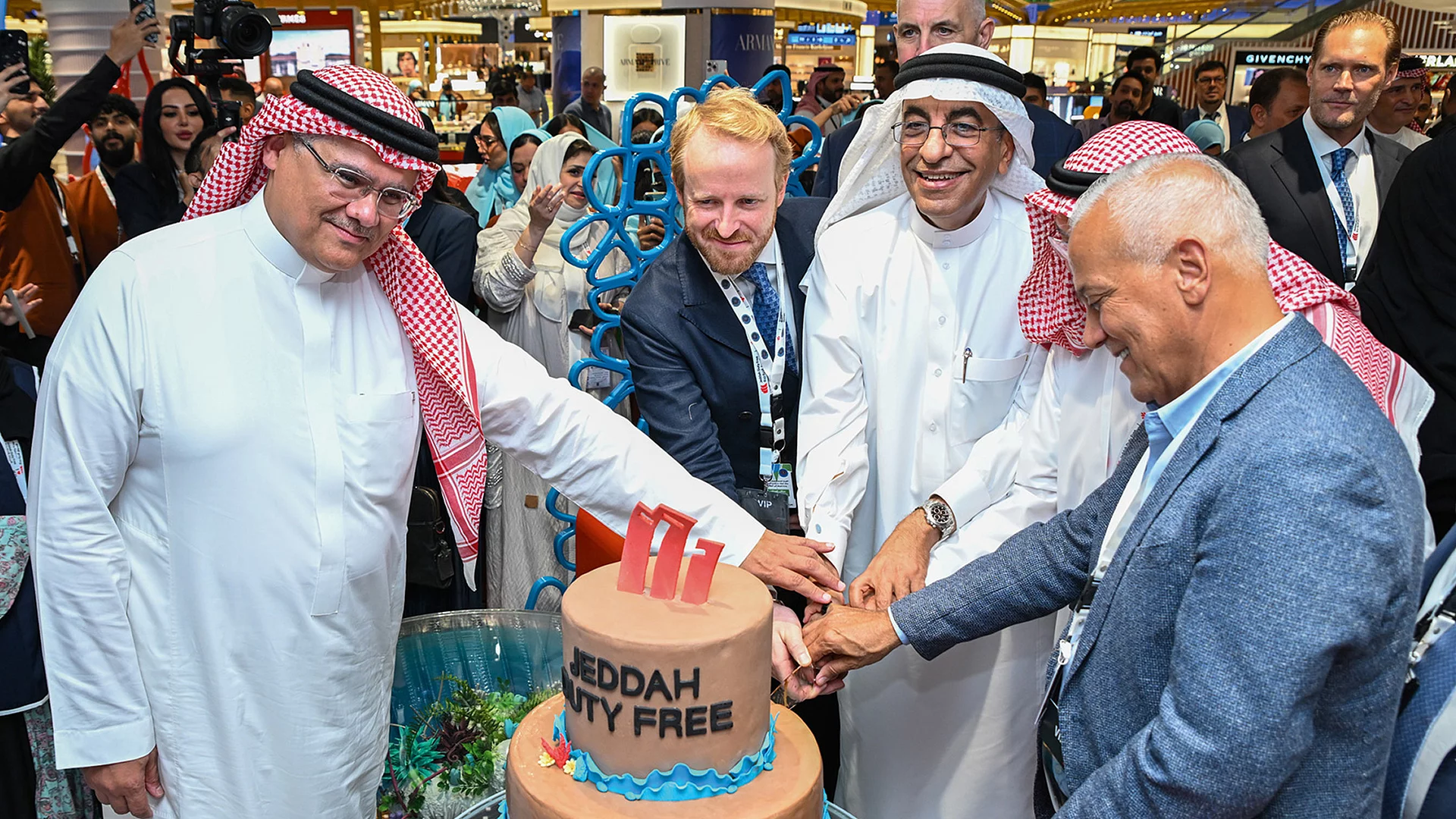
Co‑CEOs Max Heinemann and Raoul Spanger on meeting volatility with resilience and innovation to drive traveler‑centric growth.
Looking back at the past business year, what stands out the most?
Max Heinemann: We entered 2025 with high ambitions across all regions and channels – which is actually quite consistent with how we approach targets and budgets in general. We are proud to say that we closed the year with a successful ten percent increase in revenue. What stood out, however, was the realization that it has become almost prudent to factor volatility into our aspirations. This should not affect the “if” or “whether,” but rather the “how” of achieving them. As a result, ways of working and the broader discussion around our operating model as a global group of partnerships became a necessary and meaningful dialogue. In addition, we strengthened key partnerships and delivered strong results in regions that are currently reshaping global travel – while also remaining mindful that some of these markets are undergoing a period of significant instability.
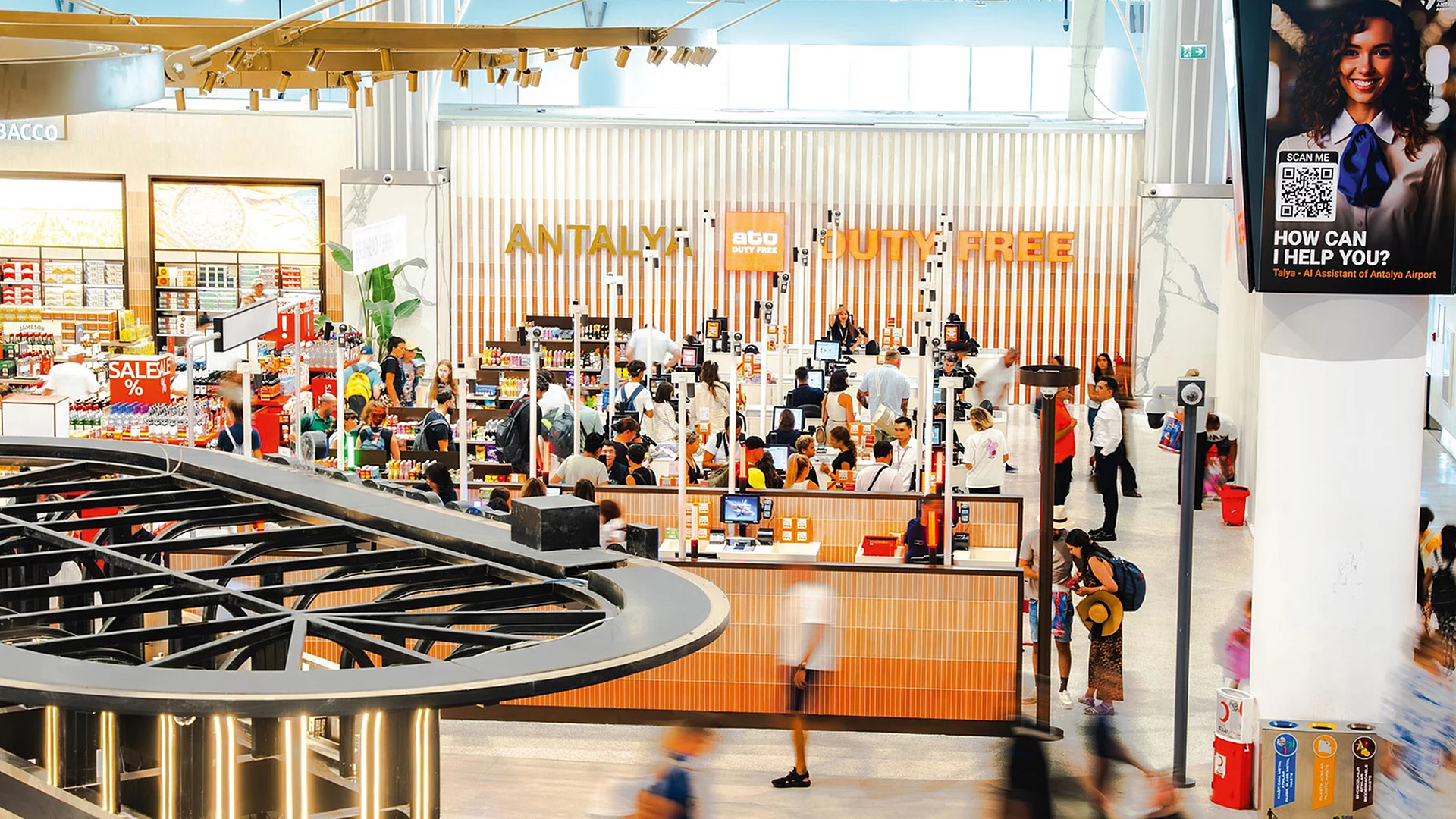
Raoul Spanger: The developments in 2025 have validated our strategic pillars. Clarity, focus, and diversification remain powerful levers in our evolving industry. Our portfolio across channels and regions, in both retail and distribution, has proven resilient, with especially strong contributions from cruise, border shops, and our business in Middle East Africa – a region with strong long-term potential, even as it navigates a period of deep disruption and unpredictable developments. We also made progress in two strategically relevant markets. In Keflavík, our concession opened a new market in the Nordics with a strong sense-of-place concept. In Antalya, we started and expanded our retail operations with ATU Duty Free, strengthening our position in one of the Mediterranean’s most dynamic travel hubs. Building on this momentum, group turnover reached 4.7 billion euros.
The year 2025 showed that structural market dynamics are shifting faster than many expected. What kinds of shifts influence you the most, and what do they mean for your business model?
Raoul Spanger: Global traffic is moving east. While the region faces significant turmoil, key hubs in the Middle East still play a major role in shaping international travel flows over the medium to long term. At the same time, new-generation aircraft enable long-haul, point-to-point travel with smaller planes. This creates new corridors beyond the traditional hubs and requires us to reassess where and how we position our business. While we cannot influence macro developments, we can adapt our operating model by expanding channels, modernizing logistics for greater speed and efficiency, and strengthening regional infrastructure. One concrete example is our upcoming logistics hub in Turkey, which will significantly shorten delivery times for our customers.
Max Heinemann: Younger generations, especially, are redefining what good travel looks like: intuitive flows, friction-free processes, beautifully designed spaces, and retail that feels human, curated, and meaningful. These expectations raise the bar for airports, retailers, and brands alike and call for deeper collaboration. If we align around the traveler and design for relevance, our industry can take a meaningful step forward.
What does Gebr. Heinemann’s vision of turning travel time into valuable time mean for tomorrow’s travelers?
Raoul Spanger: For emerging generations, valuable time is emotional time – moments of discovery, identity, and connection. To enable this kind of experience-driven retail, commercial and contracting models must evolve to allow for more agility, more room to test and learn, and a sharper focus on traveler engagement and satisfaction. We need strong partnerships built on shared value, shared purpose, and increasingly shared risk where airports, brands, and retailers co-design the journey – from layout and sensory design to digital integration and operational flow. Our collaborations in Istanbul, Antalya, Jeddah, and Oslo show that when alignment is high, the traveler feels it immediately. In Jeddah in particular, we continue to move forward with a measured and future-oriented approach, given the evolving regional conflict.
Why is Gebr. Heinemann the right partner for such future-oriented collaborations?
Max Heinemann: As a family business, we are distinctive. We place high value on continuity, proximity, and genuine relationships – most of the people we work with know us personally and meet with us regularly. We are flexible and can operate in every collaboration model; we are the long-term player that will still be there in the years ahead. Our partners know they can rely on us beyond business quarters and well beyond contract terms. This trust has grown over decades, and it becomes essential when markets turn.
How does your investment in the GHARAGE Ventures fund support your path into the future of travel retail?
Max Heinemann: Innovation doesn’t happen in isolation. Rather, it emerges where fresh ideas, new technologies, and operational expertise meet. This is precisely the mission of GHARAGE Ventures, operated by our wholly owned subsidiary, GHARAGE. GHARAGE Ventures gives us, as an investor in its fund, early visibility into emerging consumer behaviors, travel technologies, and bold founders, pushing us to think beyond today’s boundaries. It builds a bridge between the agility of start-ups and the scale of an operator like us. This combination is powerful, and it makes our investment a strategic commitment to the future of our industry.
As a family business aiming to maintain long-term financial independence, profitability is non-negotiable. What does that look like day to day?
Raoul Spanger: It means discipline in every decision. We do not chase volume; we focus on sustainable economics. We integrate new business carefully, stay cost-conscious across all teams, and ensure that strategic projects only create value when they are executed consistently. Profitability protects our entrepreneurial freedom, which is essential for a family business that plans beyond quarterly cycles.
Looking ahead, what gives you confidence?
Raoul Spanger: The industry’s resilience and our diversified foundation. The Middle East and Africa remain important priorities for us. Despite the significant instability affecting parts of the region, the fundamentals that make it relevant for global travel remain intact. Our presence in Saudi Arabia and Dubai enables us to stay close to partners and to respond with care, adaptability, and a long-term mindset. India is entering a new phase of aviation, and Noida will be a key milestone. Turkey is both a commercial and logistics powerhouse, and Istanbul is becoming a major hub for international flows.
Max Heinemann: Our people and our partners make me confident. Their dedication, creativity, and trust form the foundation of our continuity – something the world needs more than ever. Our environment remains volatile, with geopolitical tensions, inflationary pressures, shifting passenger flows, and new traveler expectations. But the long-term fundamentals of travel are strong: People want to see the world. Travel continues to grow. And it has never been more culturally meaningful.