Interview with Chief Commercial Officer Inken Callsen and Chief Sales Officer Florian Seidel
2025 was a year of strong momentum. How did you experience it together?
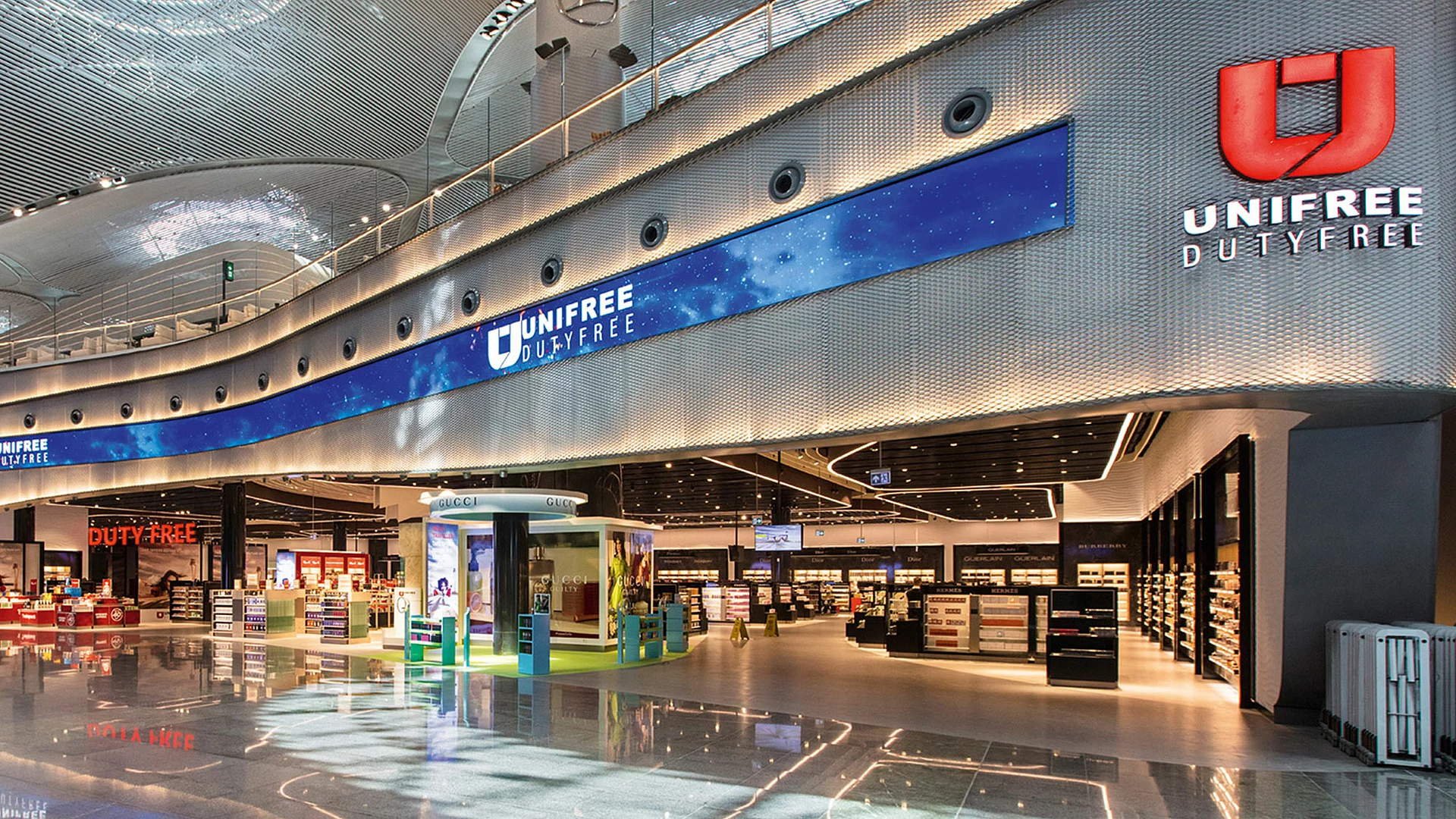
Florian Seidel: Our global footprint grew in ways that directly reflected our joint strategy. We saw strong development in Turkey with Istanbul and Antalya, expanded our presence in Jeddah and Keflavík, and strengthened our border retail and cruise segments. These milestones mattered not only from a sales perspective but also because they required close coordination between our teams – particularly when it came to preparing assortments, pricing structures, and operational readiness across many regions.
Inken Callsen: Exactly. Every expansion highlights how closely Sales and Commercial are working together. Our role in Commercial is to set the strategic and analytical foundation – assortment logic, global purchasing, and long-term supplier plans. But the proof of concept happens in the markets. When the rollouts perform well, it shows that we aligned early, shared insights, and built structures that translate globally yet land locally.
You both speak frequently about focusing on the traveler. What does this mean in practice – together?
Florian Seidel: For us in Sales, the traveler perspective is the anchor for everything we do. Service, orientation, and experience in the shop must meet changing expectations. Travelers compare prices, seek inspiration, and want frictionless journeys. These demands shape not just sales strategies, but also how we brief our colleagues in Commercial, because their decisions – on assortment depth, brand mix, or exclusives – directly influence whether we can bring that experience to life.
Inken Callsen: And that feedback loop is essential. The traveler focus becomes a genuine competitive advantage only when we connect upstream and downstream insights. The analytical side – data on preferences, price perception, category shifts – must be paired with what the sales teams observe daily on the shop floor. That combination allows us to refine assortments, clarify category roles, and ensure that our commercial decisions reflect real traveler behavior, not only theoretical models.

Inken, curated assortments are a major strategic shift. How do these changes connect to Sales?
Inken Callsen: We moved away from broad, democratic assortments toward curated, impact-driven ranges. That means fewer mid-tier brands, more clarity, and stronger anchors: luxury, niche, travel retail exclusives, and accessible entry formats. The Assortment Steering & Efficiency project, led by Oliver Kreft and Clara Heinemann, introduced the processes and digital tools that allow us to steer more actively. But the true validation comes from Sales: from how travelers respond, how the products perform, and how clearly the concept resonates in the shop.
Florian Seidel: And we feel that impact immediately. Curated assortments improve navigation and enhance perception. The Berlin pilot of the Assortment Steering & Efficiency project showed how fewer items can actually drive higher sales and lower inventory. These are exactly the outcomes that matter in a shop environment – and they confirm that the strategic work from Commercial translated into real traveler relevance. The interplay here is constant: Our feedback helps fine-tune scope and execution; Commercial gives us clarity and consistency across markets.
Pricing is another area where Commercial and Sales must be tightly aligned. How does your collaboration work here?
Inken Callsen: Pricing is consumer-led and data-powered. We continuously analyze how travelers benchmark prices and where they expect value. Our price engine translates our strategy into clear rules and governance. But agility is key: markets move quickly. So we adjust promotions or price points when data or perception shifts. That only works because we have transparent exchange with Sales, who see reactions in real time.
Florian Seidel: Our teams rely heavily on Commercial’s clarity and methodology. When rules are clearly defined and anchored in consumer insight, it strengthens trust – internally and externally. And it empowers our shop teams. They can focus on execution rather than trying to interpret pricing logic. Together, we ensure that our value proposition stays competitive and credible across all channels.
Data sharing is becoming increasingly important for the industry. How do your areas benefit jointly?
Inken Callsen: Structured collaboration has matured significantly since the early days of the Travel Retail Data Innovation Group (TRDIG) in 2017. And our Summit in 2024, which had the headline “Power of Collaboration,” as well as multi-partner activations – like the “Prada Holiday Magic Tale” pentarchy in Copenhagen – show how shared data and aligned planning can transform the traveler journey. These successes are only possible when Commercial, Sales, suppliers, and airports work as one ecosystem.
Florian Seidel: Such activations only work when they land operationally. The framework – meaning the requirements – are determined by the market. Within these parameters, Commercial contributes its expertise using a data-driven approach. Afterwards, the process returns to the market, where execution on the shop floor makes the experience tangible for travelers and shoppers. The seamless traveler journey only becomes real when both sides synchronize timing, storytelling, inventory, and front-line engagement.
Global purchasing power and supplier management – how does it shape your collaboration?
Inken Callsen: Centralizing our global purchasing power enables us to negotiate with suppliers more consistently and plan long-term developments on a global scale. Suppliers gain clarity and speed. But equally important is ensuring that these global plans match the commercial needs of each region – and that’s where Sales remains essential. Their input ensures that global decisions are realistic and relevant in the market.
Florian Seidel: From our side, the benefit is immediate: clearer agreements, faster execution, and better coordination when launching innovations. Our joint approach gives regions the flexibility to adapt locally while remaining aligned with global standards. It creates a common language with our partners.
Supply chain transformation is a major pillar of the corporate strategy. How do both areas contribute?
Inken Callsen: Our logistics modernization program in Germany, combined with the new logistics hub in Istanbul, is designed to make the network more resilient, more automated, and closer to key growth markets. It is a fundamental enabler for commercial performance. Efficient replenishment, better forecasting, and sustainable transport solutions allow us to support the growth Sales is driving in the markets.
Florian Seidel: Reliable replenishment and agile supply chains are critical for store performance. The Istanbul hub in particular will make a noticeable difference in speed and availability for Turkey and the Middle East. For us, this is a true example of how Commercial decisions and Sales realities intersect: What starts as a strategic investment becomes an everyday performance edge.
Looking ahead to 2026: Where will your collaboration deepen further?
Florian Seidel: 2026 will be about sharpening operational excellence, expanding in high-potential markets, and strengthening long-term partnerships. To do this, Sales and Commercial must remain closely connected – from early decision-making to execution. Strong tools and processes help, but what truly makes the difference is the shared mindset we have built.
Inken Callsen: We have laid the groundwork for globally scalable processes, but now we must bring them to full impact. Assortment and pricing strategies will continue evolving, and we will work even more closely with suppliers to bring innovations and distinctive experiences to the traveler. None of this works without seamless collaboration with Sales. Commercial sets direction, Sales brings it to life – and only together can we create a compelling, future-ready Heinemann experience.
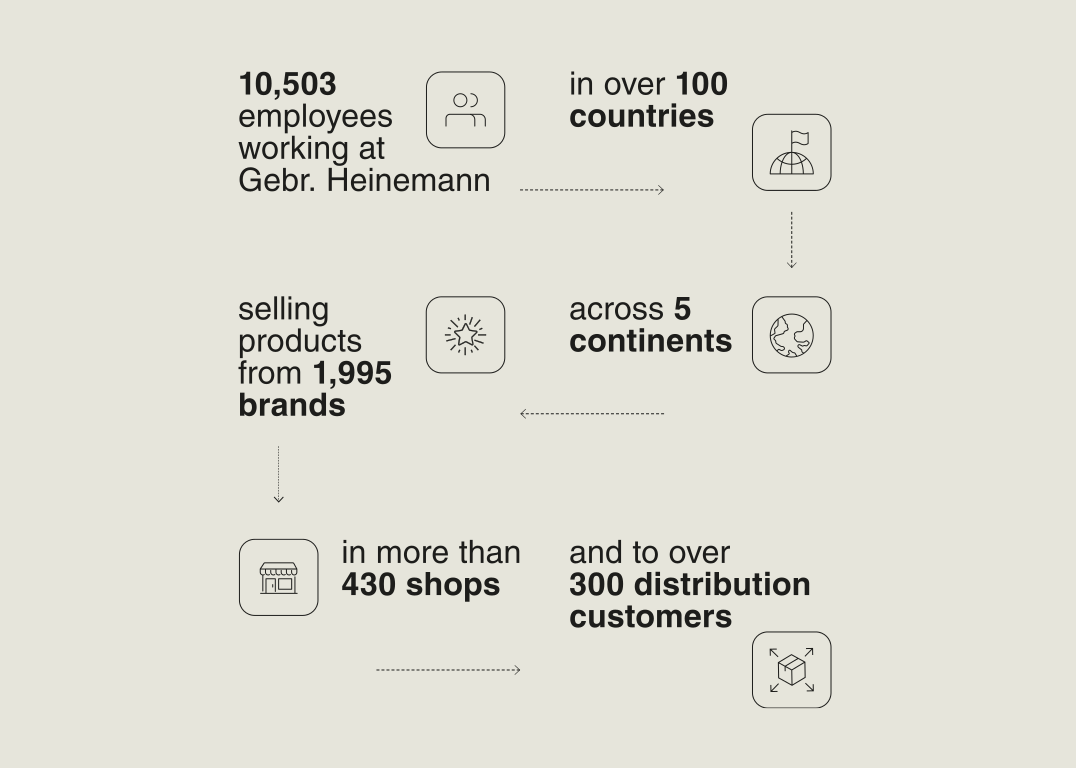
Global Footprint at a Glance